When production lines grind to a halt due to valve leakage, the staggering costs of repairs and operational downtime often catch management unprepared. In demanding industrial environments, the stability of fluid control systems serves not just as the foundation of manufacturing processes, but as the lifeline of operational efficiency. Flanged ball valves, functioning as the indispensable "heart" of modern pipeline systems, have emerged as the preferred solution for high-pressure, high-temperature, and complex media environments through their exceptional sealing capabilities and efficient operation.
Structural Logic and Core Advantages
The defining feature of flanged ball valves lies in their spherical mechanism. A precisely engineered bore through the center of the ball enables accurate fluid regulation—when aligned with the pipeline axis, media flows unimpeded; a 90-degree rotation completely seals the passage. This elegant mechanical principle delivers three critical advantages:
-
Rapid actuation: Quarter-turn operation enables emergency shutdowns within seconds, minimizing response time during critical incidents.
-
Leak-proof performance: Flanged connections combined with precision-machined seats maintain hermetic sealing even under extreme pressure differentials.
-
Bidirectional capability: Most designs accommodate flow in either direction, simplifying pipeline architecture and reducing installation complexity.
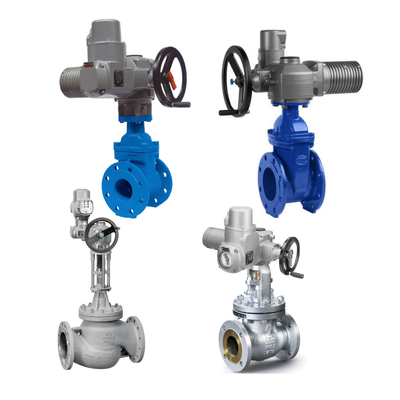
Unlike gate or globe valves that require multiple rotations for operation, the ball valve's quarter-turn mechanism significantly reduces actuation energy and wear on sealing components—a crucial factor in high-cycle applications.
Selection Methodology: Matching Valve to Application
Proper valve selection forms the cornerstone of long-term system reliability. Engineers must evaluate these critical parameters:
Construction Type
Three primary configurations exist: single-piece bodies for compact installations, two-piece designs offering moderate serviceability, and three-piece valves enabling in-line maintenance without pipeline disassembly—particularly valuable for systems requiring frequent inspection.
Flow Characteristics
Full-port designs maintain near-zero pressure drop, ideal for viscous fluids or systems sensitive to flow restrictions. Standard-port valves provide cost-effective solutions where minor pressure losses are acceptable.
Pressure Management
Floating ball designs suffice for moderate pressures, while trunnion-mounted variants utilize mechanical anchoring to withstand extreme forces in large-diameter pipelines—common in oil transmission and high-pressure steam applications.
Industrial Performance Across Sectors
The versatility of flanged ball valves spans hydrocarbon processing, chemical manufacturing, water infrastructure, and pharmaceutical production. Material compatibility—from corrosion-resistant alloys to specialized polymers—allows reliable operation with aggressive media including:
-
Hydrochloric acid streams in chemical reactors
-
Superheated steam in power generation
-
High-pressure natural gas transmission
-
Ultrapure water in semiconductor fabrication
Operational Longevity Strategies
Maximizing service life requires disciplined maintenance protocols:
-
Controlled actuation: Gradual opening/closing prevents water hammer effects that degrade sealing surfaces.
-
Preventive monitoring: Regular inspection of stem seals and flange joints detects incipient leaks before catastrophic failure.
-
Contamination control: Periodic lubrication of moving parts and removal of particulate buildup prevents mechanical binding.
-
Actuator calibration: Ensuring proper torque matching between drives and valve requirements prevents stem deformation or seat damage.
Through methodical selection and rigorous maintenance, flanged ball valves deliver unmatched reliability—transforming from simple flow control devices into strategic assets that safeguard industrial productivity.


 Your message must be between 20-3,000 characters!