Introduction: The "Digital Species" Reshaping Productivity
In the wave of Industry 4.0, manufacturing is undergoing a profound transformation from "labor-intensive" to "intelligence-intensive." If we compare modern automated factories to precisely functioning organisms, industrial robots undoubtedly represent the core "digital workforce." They are not merely combinations of steel and circuits, but extensions of human intelligence in physical space. Their ability to complete precision operations within milliseconds—performance that surpasses human limits—isn't achieved through simple mechanical assembly, but rather through an intricate control loop consisting of perception, decision-making, actuation, and execution.
1. Control System: The Robot's "Central Nervous System"
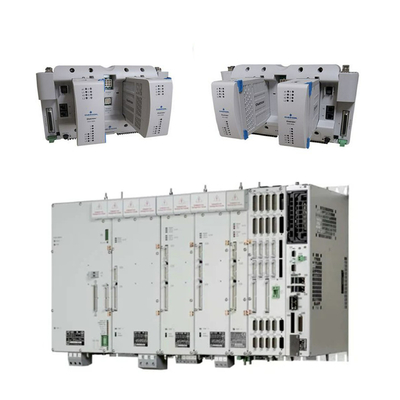
The controller serves as the robot's brain—the "central nervous system" of the entire system. More than just a logic processor, it functions as a real-time high-performance computing center. From traditional joysticks to industrial computers integrating complex kinematic algorithms, the evolution of controllers mirrors the improvement in industrial robot precision.
From a data analysis perspective, the controller represents the source of all robot data. It processes massive inputs from sensors and vision systems, converting complex spatial coordinates into real-time instructions for each joint motor through inverse kinematics calculations. Modern controllers support millisecond-level cycle times, ensuring mechanical arms maintain sub-millimeter repeat positioning accuracy even during high-speed movements.
2. Robot Arm: The Physical Medium for Motion Execution
The mechanical arm forms the skeleton through which robots interact with the physical world. Comprising three core joints—shoulder (base), elbow, and wrist—this multi-degree-of-freedom (DOF) design essentially enables precise point-to-point displacement in three-dimensional space through complex coordinate transformations.
The shoulder handles large-scale spatial positioning, determining the robot's working radius; the elbow enables mid-section flexibility to avoid spatial obstacles; while the wrist connects to end effectors for fine posture adjustments. This biomimetic design allows robots to simulate human arm movements and even perform complex operations in confined spaces beyond human capability.
3. Sensor System: Environmental Perception and Feedback
If controllers are the brain, then sensor systems constitute the robot's "nerve endings"—the interface for physical world interaction. Through high-precision torque sensors and tactile sensors, robots can perceive environmental parameters in real time, enabling collision detection and force control.
In the context of "flexible manufacturing," sensor systems grant robots "perception." For instance, during precision assembly tasks, force feedback sensors can detect minute resistance during part assembly, identifying jams or misalignments to automatically trigger correction logic. This real-time feedback mechanism forms the core safety guarantee in human-robot collaboration (cobot) scenarios.
4. Vision System: Spatial Cognitive Capability
Vision systems serve as industrial robots' "eyes," granting them cognitive ability in unstructured environments. Using high-resolution camera arrays to capture images coupled with deep learning algorithms for feature extraction and pattern recognition, robots achieve object identification, defect detection, and path planning.
In modern smart factories, vision systems have evolved from simple "positioning" to full "cognition." For example, in logistics sorting scenarios, vision systems can identify variously shaped packages in real time while calculating optimal grasping points; in quality inspection, they detect microscopic scratches invisible to the naked eye.
5. Drive System: Power Transmission and Execution
Drives function as joint "muscles," typically consisting of high-performance servo motors, precision reducers, and transmission belts that convert control system electrical signals into mechanical kinetic energy. Servo motor response speed determines dynamic performance, while reducers (like RV or harmonic reducers) determine output torque and precision maintenance capability.
The essence of drive systems lies in "closed-loop control." Through encoders providing real-time feedback on motor speed and position, controllers can implement millisecond-level deviation corrections. This high-precision closed-loop control ensures mechanical arms maintain exceptional repeat positioning accuracy even during high-speed operation.
6. End-of-Arm Tooling (EOAT): The Ultimate Operation Interface
EOAT represents the robot component that directly contacts workpieces—equivalent to human "hands." Whether pneumatic grippers, vacuum cups, electromagnetic chucks, or specialized welding torches, EOAT design directly determines application boundaries. Through coordinated movement with wrist joints, EOATs execute complex grasping, rotating, and placement tasks.
Industrial practice requires balancing gripping force, weight, compatibility, and changeover convenience in EOAT selection. Modular designs now enable quick-change systems where robots can switch from "welding hands" to "material handlers" within seconds, dramatically enhancing production line flexibility.
7. Power Systems: Energy Supply Architecture
Robot system stability relies on continuous power support. Whether electrical (AC power, batteries), hydraulic, or pneumatic systems, their energy conversion efficiency directly impacts load capacity and operational duration. Industrial design necessitates reasonable power redundancy to ensure uninterrupted production.
Modern robot systems increasingly emphasize energy management. Technologies like energy recovery (converting potential energy to electricity during arm deceleration) effectively reduce overall operational costs. Moreover, power system stability monitoring constitutes a critical predictive maintenance component, where anomalies like voltage fluctuations or air leaks often precede production halts.
8. Graphical User Interface (GUI): Human-Machine Interaction Efficiency
Advancements in software engineering have equipped modern robots with highly integrated GUIs that lower operational barriers while drastically reducing production changeover and task debugging time through visual programming. From a data perspective, intuitive interfaces minimize uncertainty from manual intervention, boosting overall efficiency.
GUIs transcend mere control panels, serving as robot "digital dashboards" where operators monitor real-time status, task progress, alarm logs, and historical performance data. Complex industrial logic becomes accessible through flowcharts and parameter lists, enabling rapid adoption by non-specialists for agile production response.
Conclusion: The Leap from Automation to Intelligence
These eight core components don't operate in isolation but form a tightly coupled, high-speed bus protocol network creating an efficient, reliable, and intelligent automation ecosystem. For industrial professionals, understanding these underlying mechanisms addresses immediate troubleshooting needs while securing strategic advantages in the coming human-robot collaboration era.
When integrated with big data analytics, artificial intelligence, and edge computing, industrial robots transcend repetitive task execution to become self-learning, self-optimizing "digital labor" capable of evolution. They're propelling manufacturing from automation to intelligence, delivering unprecedented efficiency gains worldwide. In this transformation, every professional mastering these technological principles becomes both a driver and beneficiary of this industrial revolution.


 Your message must be between 20-3,000 characters!