Fisher DVC6200 Valve Positioner: How to Choose the Right Model (Practical 2026 Selection Guide)
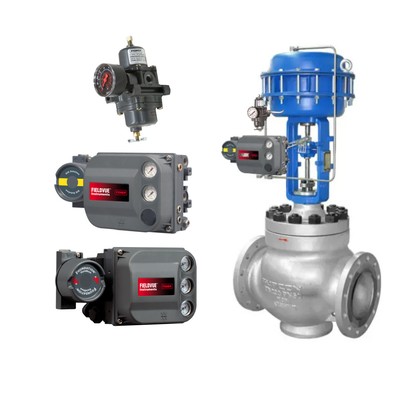
If you're sizing up a digital valve controller for a refinery, power plant, or chemical facility, the Fisher DVC6200 valve positioner is often the go-to. It's not just one box—Emerson offers variations that can make or break your application. I've seen teams waste weeks (and budgets) because they picked the wrong relay or protocol, so let's cut through the catalog noise with real-world guidance on Fisher DVC6200 selection.
The core idea: The DVC6200 is a linkage-less, non-contact smart positioner that turns 4-20 mA (or fieldbus) into precise pneumatic output for single- or double-acting actuators. But the "right" one depends on your actuator type, safety needs, environment, and how you want to talk to it.
Step 1: Actuator Type – Single Acting vs Double Acting
This is usually the first fork in the road.
- Single Acting (most common): Works with spring-return actuators (e.g., Fisher 657/667, 585C). Choose:
- Direct → air-to-open / spring-to-close (fail-closed) → typical for safety-critical isolation in oil & gas ESD.
- Reverse → air-to-close / spring-to-open (fail-open) → common in steam or cooling water where you want valve open on loss of air.
- Relay options: Usually Relay A (standard) or Low-Bleed A for Quad O compliance (steady-state bleed ≤6 scfh).
- Double Acting → piston actuators without spring (e.g., larger 585 or custom pistons). Needs balanced force for high thrust in anti-surge or high-ΔP throttling.
- Requires Relay C (double-acting relay) or special config.
- Popular in heavy-duty petrochemical recirculation or compressor recycle valves.
Quick rule: If your actuator has a spring → single acting. If it's a piston with no spring → double acting. Wrong choice = no movement or wrong fail position.
Step 2: Communication Protocol – How Do You Talk to It?
- HART (most popular) → 4-20 mA + HART 5 or HART 7. HART 7 gives better diagnostics polling speed. Use for traditional analog loops in water/wastewater or power plants.
- FOUNDATION Fieldbus (DVC6200f) → full digital fieldbus for DeltaV or other FF systems. Excellent for large-scale petrochemical DCS integration.
- PROFIBUS PA → less common, but still available for European plants using Siemens or ABB systems.
Tip: If you're upgrading from old analog positioners, stick with HART DVC6200. New greenfield with digital fieldbus → go DVC6200f.
Step 3: Diagnostics Level – How Much Insight Do You Want?
- Standard → basic self-checks (travel deviation, air supply issues). Good for simple on/off valves.
- Performance Tuner / Advanced → full valve signature, dynamic error band, friction trend, step response. Essential for predictive maintenance in batch pharma or high-uptime refineries.
- SIS (Safety Instrumented Systems) → DVC6200 SIS version with partial stroke testing (PST), SIL 3 capable. Must-have for emergency shutdown valves in oil & gas or LNG.
Rule of thumb: If you do monthly valve health reports → get Performance Diagnostics. If it's a safety loop → SIS version only.
Step 4: Housing & Materials – Surviving the Environment
- Standard → aluminum housing + thermoplastic cover + nitrile elastomers → fine for indoor/general use.
- Stainless Steel Housing → for offshore, marine, or corrosive chemical plants (salt spray, acids).
- Fluorosilicone Elastomers → extreme cold (-55°C) or hot applications.
- Remote Mount (DVC6205 + DVC6215 feedback unit) → sensor separate from electronics → perfect for very high/low temps or severe vibration.
Real-world pick: Offshore platform in Gulf of Mexico? Stainless + remote mount. Normal refinery control room? Standard aluminum is fine.
Step 5: Hazardous Area & Other Certifications
- Explosion-proof / Intrinsically Safe / Flameproof / Non-incendive
- ATEX, IECEx, FM, CSA, CUTR, NEPSI, INMETRO, etc.
- Natural gas certified (sweet/sour)
- SIL 3 (for SIS models)
- Marine approvals (Lloyd's, DNV) for offshore
Tip: Always verify the exact hazardous area classification on your site (Zone 0/1/2, Gas Group, Temp Class) and match the certificate.
Quick Selection Matrix (2026 Practical)
| Application Scenario |
Recommended DVC6200 Variant |
Key Reasons |
| Standard throttling in refinery |
DVC6200 HART single acting, Performance Diagnostics |
Reliable, cost-effective, good diagnostics |
| High-ΔP double-acting anti-surge |
DVC6200 double acting Relay C |
Balanced force, no spring |
| Safety shutdown valve (ESD) |
DVC6200 SIS HART |
SIL 3 + PST required |
| Offshore corrosive environment |
Stainless steel housing + remote mount |
Corrosion resistance + temp extremes |
| Full digital fieldbus plant |
DVC6200f FOUNDATION Fieldbus |
Native FF integration |
| Extreme cold (-50°C) |
Fluorosilicone elastomers + remote mount |
Material compatibility |
Final Tips for Ordering Your Fisher DVC6200
- Use Emerson's online configurator or contact local rep with your actuator model, fail position, protocol, and area classification.
- Always order with the correct relay (A/B/C) printed on the label.
- For SIS applications, confirm PST capability and firmware version.
- Budget extra for ValveLink software if you want full diagnostics trending.
The Fisher DVC6200 valve positioner is incredibly flexible—once you nail the actuator action, protocol, and environment, the rest falls into place. Done right, it gives you years of stable control with minimal surprises.
Need help with a specific actuator model or application? Drop your details—I can walk through a sample config.
Keywords: Fisher DVC6200 valve positioner, DVC6200 selection guide, Fisher DVC6200 single acting vs double acting, DVC6200 HART, DVC6200 SIS, DVC6200 stainless steel, Fisher digital valve controller, DVC6200 in oil and gas, DVC6200 petrochemical application, DVC6200 power plant use.


 Your message must be between 20-3,000 characters!