Introduction
Choosing a pneumatic actuator involves more than matching its mounting interface to a valve. The actuator must provide sufficient torque throughout the required travel, operate with the available instrument air supply, and respond correctly when air pressure is lost.
Two common configurations are spring-return and double-acting pneumatic actuators. Both use compressed air to operate valves, but they differ in how they generate movement and what happens when the air supply fails.
Understanding these differences helps engineers select a suitable actuator package for on/off valves, process isolation, emergency shutdown, and other automated valve applications.
1. How Does a Spring-Return Actuator Work?
A spring-return actuator uses compressed air to drive movement in one direction and an internal spring to provide the return movement.
When air pressure is applied, the actuator moves the valve while compressing the spring. When the relevant air pressure is released or lost, the spring drives the actuator back toward its designated position.
Depending on the actuator and valve arrangement, this can provide a fail-open or fail-closed action.
Spring-return actuators are commonly considered where the valve must move to a defined position after loss of instrument air. Examples include certain emergency shutdown valves and process isolation valves.
However, spring return does not automatically mean fail-closed. The required failure position depends on the actuator configuration, valve mounting, direction of movement, and process safety requirements.
2. How Does a Double-Acting Actuator Work?
A double-acting pneumatic actuator uses compressed air to drive movement in both directions. Air is directed to one side of the piston or actuator mechanism to move the valve one way, then to the other side to reverse the movement.
Because both directions are pneumatically powered, double-acting designs can provide substantial output without relying on a return spring. They are widely used where powered movement in both directions is required.
One important distinction is behavior during air-supply failure. A double-acting actuator does not inherently provide a defined fail-open or fail-closed position. Depending on the arrangement, trapped air, leakage, process forces, and mechanical friction, the valve may remain near its last position or move unexpectedly.
If a defined failure response is required, the complete system may need additional equipment, such as a suitably designed air reservoir, solenoid valve, or other pneumatic control accessories.
3. Key Differences Between the Two Designs
| Factor |
Spring-return |
Double-acting |
| Powered movement |
Air drives one direction; spring provides return |
Air drives both directions |
| Defined response to air loss |
Can provide a preset return position |
No inherent spring-driven fail position |
| Output characteristics |
Spring force changes through travel |
Output depends on air pressure and actuator geometry |
| Air requirements |
Air must overcome spring force during the powered stroke |
Air is required for both directions |
| Mechanical construction |
Includes a spring mechanism |
Does not require a return spring |
| Typical selection priority |
Defined failure position |
Powered movement in both directions |
These are general differences. Actual torque, air consumption, dimensions, and response time depend on the actuator design and operating conditions.
4. How to Size a Pneumatic Actuator
Correct sizing is essential for reliable valve operation. An actuator that is too small may fail to complete its stroke, while excessive oversizing can increase cost and create other integration issues.
Step 1: Determine the valve torque requirement
Obtain the valve manufacturer's torque data for the actual operating conditions. For quarter-turn valves, this may include breakaway torque, running torque, and seating or end-of-travel torque.
Required torque can change with differential pressure, medium, temperature, seat material, and valve condition.
Step 2: Use the minimum available air pressure
Actuator output depends on the pressure available at the actuator, not simply the nominal pressure at the plant air header.
Account for pressure losses through tubing, fittings, filters, regulators, solenoid valves, and other accessories. Size the actuator against the minimum guaranteed operating pressure.
Step 3: Compare output torque across the full stroke
For a double-acting actuator, verify that the available torque meets the valve requirement in both directions.
For a spring-return actuator, check both the air-powered stroke and the spring-powered return stroke. Spring output changes with travel, so the actuator must provide sufficient torque at the critical positions, not just at one endpoint.
Step 4: Apply the manufacturer's sizing criteria
Use the valve and actuator manufacturer's sizing method, including the specified service factor where applicable. Do not rely on a universal oversizing percentage for every valve type and service.
Step 5: Verify the complete package
Check mounting dimensions, shaft or coupling compatibility, required travel, accessories, and operating time. Confirm that the actuator can perform the required movement under actual process conditions.
5. Instrument Air and Accessory Requirements
Instrument air quality and pressure directly affect actuator reliability. Before selecting an actuator, confirm the available pressure range, air quality requirements, and expected demand during operation.
A complete pneumatic package may include:
-
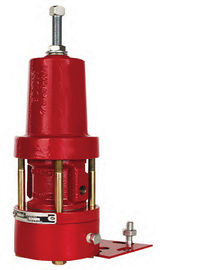
Filter regulator for suitable air supply.
-
Solenoid valve for directional control or shutdown functions.
-
Positioner for modulating applications.
-
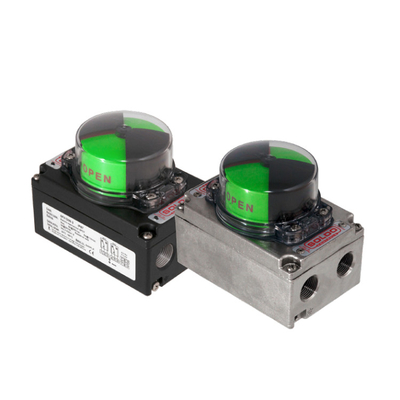
Limit switches or position feedback devices.
-
Pneumatic lock-up or air reservoir arrangements where specified.
-
Tubing and fittings sized for the required response.
The accessory configuration differs between spring-return and double-acting arrangements. For example, the required solenoid valve function and porting depend on the actuator and control scheme.
Products from manufacturers such as Rotork, AUMA, and other valve automation suppliers may be considered depending on the valve type, torque requirement, and required control arrangement. Confirm the specific product configuration before specifying a complete package.
6. Common Sizing Mistakes
Using nominal air-header pressure: The actuator may receive substantially less pressure after accessories and tubing losses.
Checking torque at only one position: This can overlook insufficient spring torque during the return stroke or insufficient output near the valve's breakaway point.
Ignoring the valve's actual operating conditions: Torque can vary with pressure differential, seat design, temperature, and service history.
Assuming a double-acting actuator will hold position indefinitely: Air leakage and process forces can cause movement after loss of supply.
Selecting accessories after the actuator: Solenoid valves, positioners, and tubing can affect pressure delivery, response, and failure behavior.
Conclusion
Spring-return and double-acting pneumatic actuators serve different operational needs. Spring-return designs can provide a defined failure position, while double-acting designs use air pressure for powered movement in both directions.
The correct choice depends on the required valve action, torque throughout travel, minimum available air pressure, process conditions, and failure scenario.
A complete selection should consider the valve, actuator, instrument air, accessories, and safety requirements as one system. This helps reduce commissioning problems and improves the reliability of automated valve operation.
Need help selecting a pneumatic actuator? Provide the valve model, required torque or valve operating data, available air pressure, and required failure action to support a more accurate selection.


 Your message must be between 20-3,000 characters!