Why Do We Use Different Types of Valves? Complete 2025 Guide
In industrial piping systems—from oil refineries to water treatment plants—no single valve fits every job. Engineers select from dozens of valve types because each handles specific challenges like flow control, pressure drop, shutoff tightness, media type, and cost. Using the wrong valve leads to leaks, cavitation, high maintenance, or process failures. This guide explains why different types of valves exist, their unique roles, advantages, and real-world applications to help you choose wisely.
Key Reasons for Different Valve Types
Valves vary due to core needs:
- Shutoff Requirements — Some demand bubble-tight seals (e.g., toxic fluids); others allow minor leakage.
- Flow Control — Precise throttling vs. simple on/off.
- Pressure Drop — Minimal loss for energy efficiency or staged reduction to prevent cavitation.
- Media Handling — Clean fluids, slurries, abrasives, corrosives, or viscosities.
- Size & Cost — Large pipelines favor low-pressure-drop designs; tight budgets pick simpler options.
- Maintenance & Durability — Easy inline repair or long life in harsh conditions.
Common industrial types include gate, globe, ball, butterfly, plug, diaphragm, check, and control valves.
How to quickly understand various industrial valve types and their ...
Main Types of Valves and Why We Use Them
1. Gate Valve: Best for On/Off Isolation
Gate valves use a wedge-shaped gate to block flow fully. They offer low pressure drop when open and straight-through flow.
Main Parts of Gate Valve: Practical Guide in 2025 | Linquip
Why use it? Minimal obstruction maximizes flow in large lines; ideal for infrequent operation.
Advantages: Low ΔP, bidirectional, cost-effective for big sizes.
Disadvantages: Poor throttling (vibration/wear), slow operation, no visual position indication.
Applications: Water distribution mains, oil pipelines, fire systems.
2. Globe Valve: Top Choice for Throttling and Regulation
Globe valves feature an S-shaped flow path with a plug/disc against a seat for excellent control.
Why use it? Linear characteristics enable precise flow modulation.
Advantages: Superior shutoff (Class VI), good throttling, easy maintenance.
Disadvantages: High pressure drop, higher cost, unidirectional typically.
Applications: Steam lines, boiler feedwater, cooling systems.
3. Ball Valve: Fast, Reliable Quarter-Turn Shutoff
Ball valves have a perforated sphere rotated 90° for quick operation and tight sealing.
Why use it? Compact, fast action, and bubble-tight shutoff even after years idle.
Advantages: Low torque, fire-safe options, minimal leakage.
Disadvantages: Poor throttling (cavitation at partial open), not for slurries.
Applications: Gas lines, chemical transfer, quick isolation.
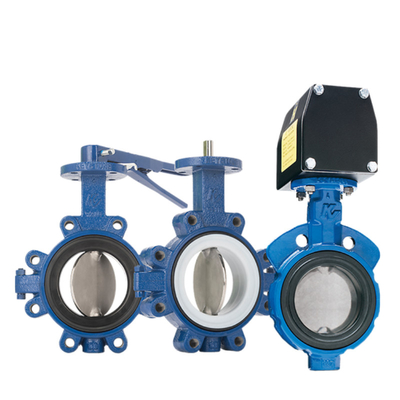
4. Butterfly Valve: Economical for Large Flows
Butterfly valves use a disc on a shaft to rotate in the flow path—lightweight and compact.
Why use it? Low cost and weight for high-volume, low-pressure apps.
Advantages: Quick operation, low ΔP, small footprint.
Disadvantages: Limited tight shutoff, cavitation risk in throttling.
Applications: HVAC, water treatment, bulk handling.
5. Plug Valve: Versatile for Slurries and Viscous Media
Plug valves feature a cylindrical/tapered plug with a bore—similar to ball but better for dirty fluids.
Why use it? Handles abrasives and viscosities without clogging.
Advantages: Good for on/off and some throttling, eccentric designs reduce wear.
Disadvantages: Higher torque, potential leakage over time.
Applications: Pulp/paper, wastewater, oil sands.
6. Diaphragm Valve: Ideal for Corrosive or Sanitary Service
Diaphragm valves isolate fluid with a flexible membrane—zero stem leakage.
Why use it? Prevents contamination; perfect for aggressive chemicals or pharma.
Advantages: Excellent for sterile/clean apps, no packing gland.
Disadvantages: Limited pressure/temperature, diaphragm wear.
Applications: Pharmaceutical, food & beverage, ultrapure water.
7. Check Valve: Automatic Backflow Prevention
Check valves allow unidirectional flow and close automatically to prevent reverse.
Why use it? Protects pumps and compressors from damage.
Advantages: No actuation needed, various styles (swing, lift, dual plate).
Disadvantages: Some slamming noise, pressure drop.
Applications: Pump discharge, compressor outlets.
Valve Type Comparison Table (Quick Selection Reference)
| Valve Type |
Best For |
Shutoff Quality |
Pressure Drop |
Throttling |
Cost |
Typical Size Range |
| Gate |
Isolation/On-Off |
Good |
Very Low |
Poor |
Low |
2"–72"+ |
| Globe |
Throttling/Regulation |
Excellent |
High |
Excellent |
Medium |
1/2"–24" |
| Ball |
Quick Shutoff |
Excellent |
Low |
Poor |
Medium |
1/4"–48" |
| Butterfly |
Large Flow Control |
Moderate |
Low |
Fair |
Low |
2"–100"+ |
| Plug |
Slurries/Viscous |
Good |
Low |
Fair |
Medium |
1/2"–36" |
| Diaphragm |
Sanitary/Corrosive |
Excellent |
Medium |
Good |
High |
1/4"–12" |
| Check |
Backflow Prevention |
Varies |
Medium |
None |
Low |
All sizes |
How to Choose the Right Valve Type
- On/off or throttling? → On/off → gate/ball/butterfly; Throttling → globe/control.
- Tight shutoff needed? → Yes → ball/diaphragm/globe.
- Media clean or dirty? → Dirty/slurry → plug or eccentric butterfly.
- Pressure drop critical? → Yes → gate/ball/butterfly.
- Sanitary/corrosive? → Diaphragm or lined valves.
Conclusion: No One-Size-Fits-All in Valves
We use different types of valves because every process demands unique performance—balancing flow, sealing, durability, and economics. Picking the right one cuts energy costs, extends life, and prevents failures. In 2025, with smarter materials and actuators, selection grows more critical than ever. Next time you spec a valve, ask: "What job does this really need to do?" The answer points to the perfect type.
Keywords naturally covered: types of valves, why different valve types, valve selection guide, gate vs globe vs ball valve, industrial valve applications, valve comparison chart, control valve types.


 Your message must be between 20-3,000 characters!