Masoneilan SVI II AP Smart Digital Positioner for Control Valve Maintenance
Product Overview
Commissioning a control valve is not simply a matter of connecting an instrument air line and applying a control signal. The positioner must recognize the valve's travel limits, respond to the actuator and maintain a suitable control response.
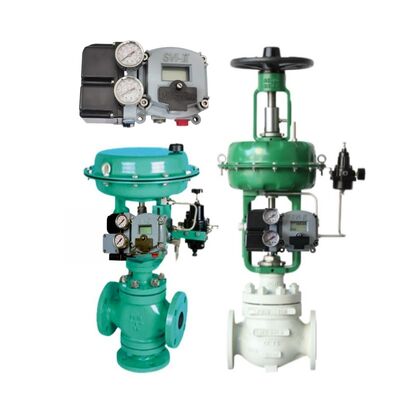
The Masoneilan SVI II AP is built to support these tasks. Its microprocessor-based control system works with a 4–20 mA input and HART communication. During setup, automatic stop detection identifies the valve's operating limits, while auto-tuning establishes initial control parameters. Technicians can then review the response and adjust the settings to suit the actual valve assembly.
For maintenance teams, the SVI II AP offers more than basic position control. Depending on the diagnostic level and software configuration, available functions include cycle counting, travel accumulation, valve opening and closing time monitoring, step tests and valve signature analysis.
The positioner uses non-contact position sensing, which avoids a mechanical sensing shaft entering the main housing. An optional local LCD and external push buttons provide access to device information and local configuration.
These functions make the SVI II AP useful not only for new valve installations but also for maintenance, troubleshooting and selected retrofit work.
Technical Specifications
| Parameter |
Specification |
| Model |
Masoneilan SVI II AP |
| Positioner Type |
Microprocessor-based digital positioner |
| Input Signal |
4–20 mA |
| Communication Protocol |
HART Revision 5 or 7 |
| Input Resistance |
450 Ω |
| Start-up Current |
3.2 mA minimum |
| Position Feedback |
Non-contact sensing |
| Automatic Setup |
Auto stops and auto tune |
| Standard Diagnostics |
Alarms, cycle counter, travel accumulator, opening/closing time and near-close time |
| Advanced Diagnostics |
Includes standard diagnostics plus low air supply alarm and valve signature functions |
| Diagnostic Tests |
Step test and positioner test |
| Actuator Action |
Single-acting or double-acting |
| Valve Type |
Linear or rotary |
| Rotary Travel |
18°–140° |
| Standard Reciprocating Travel |
6–64 mm |
| Local Interface |
Optional LCD and three external push buttons |
| Enclosure |
Copper-free aluminum standard; stainless steel option |
Diagnostic functions depend on the installed diagnostic level and configuration. Confirm the exact functions available on the unit being purchased.
Application Industry
The diagnostic and commissioning functions are relevant to facilities where control valve performance affects process stability, equipment protection or maintenance planning.
-
Refineries: Monitoring control valves used in distillation and process regulation
-
Petrochemical plants: Commissioning and maintenance of pneumatic control valve assemblies
-
Power plants: Valve position control in steam and auxiliary systems
-
Oil and gas facilities: Control valve maintenance in production and processing units
-
Chemical plants: Troubleshooting valve response in continuous process operations
Common Problems
Commissioning takes longer than expected
Incorrect linkage, travel settings or actuator configuration can delay startup. Confirm the mechanical installation first, then run the appropriate initialization procedure.
Valve response changes after maintenance
A change in actuator, spring, linkage or valve trim can affect the original tuning. Recheck the travel setup and evaluate the response after maintenance.
Maintenance teams cannot identify the cause of poor valve performance
Positioner diagnostics can provide useful information about travel, cycles and valve signatures. However, diagnostic results should be considered alongside mechanical inspection and process conditions.
The positioner reports low air supply
Check the instrument air source, filter regulator, tubing and pneumatic connections. A positioner cannot compensate for an inadequate or unstable air supply.
The device communicates locally but not through the control system
Verify the HART loop, wiring, loop resistance and host configuration. Also confirm that the control system is configured for the installed device.
Replacement Models
When an SVI II AP requires replacement, first establish whether the problem is caused by the positioner itself or by the actuator, valve linkage or air supply.
Potential replacement or upgrade routes include:
-
SVI II AP, matching configuration: Suitable as a like-for-like sourcing option when the original part number and options are confirmed.
-
SVI II AP High Flow: An option for applications requiring higher pneumatic output capacity; check the actuator demand and relay configuration.
-
Masoneilan SVI3: A possible upgrade candidate, but requires a full review of mounting, communication, pneumatic connections and approvals.
Do not assume that a unit with the same family name has the same diagnostic functions or pneumatic capacity. Check the complete ordering code.
Why Buy From Us
For maintenance and shutdown work, getting the correct configuration is just as important as getting the product itself.
We can assist with:
-
Identifying the SVI II AP from a nameplate or part number
-
Checking standard-flow and high-flow versions
-
Reviewing single-acting and double-acting requirements
-
Sourcing positioners for plant maintenance and spare-part programs
-
Coordinating delivery for scheduled maintenance work
Providing the original model information at the inquiry stage helps avoid unnecessary exchanges during procurement.
Stock & Delivery Time
Lead time depends on the requested SVI II AP version and its options. Display, relay, housing material, diagnostic level and certification requirements may affect availability.
For urgent maintenance requirements, please include the shutdown date or required arrival date in your inquiry. We will check supply availability and advise the estimated delivery schedule.
RFQ Form
Please provide the following details:
-
Model: Masoneilan SVI II AP
-
Part Number
-
Quantity
-
Standard Flow or High Flow
-
Single-Acting or Double-Acting
-
Diagnostic Requirement: Standard / Advanced / To be confirmed
-
Display Requirement: With / Without
-
Existing Valve and Actuator Model
-
Maintenance or Shutdown Date
-
Destination Country
-
Nameplate and Installation Photos
If you are replacing a failed unit, please describe the fault and the current actuator arrangement. This will help us check whether the requested model is suitable.


 Your message must be between 20-3,000 characters!




Overall Rating
Rating Snapshot
The following is the distribution of all ratingsAll Reviews